0964 466 014





WHEN CHILDREN GROW UP: IS DISTANCE A BARRIER OR A BRIDGE?
There is a quiet emotion that many parents keep to themselves.
Why does a child seem to grow more distant as they grow older?
From a little one who once eagerly shared stories about school every day, your child gradually retreats into a private world filled with unspoken thoughts. This change often leaves parents with a sense of emptiness. Some feel worried, others feel a quiet sadness, and many begin to wonder if they are slowly losing connection with their child.
But dear parents, please be reassured.
That distance is not necessarily a sign of disconnection. In many cases, it is a natural sign of growth.


1. The natural psychology of growing up
Developmental psychology identifies the period from late primary school to adolescence as a critical stage for identity formation. Psychologist Erik Erikson described this as the conflict between identity and role confusion. During this stage, children begin to ask important questions such as who they are and who they want to become.
To find their answers, they must explore their own thinking, form personal perspectives, and gradually step away from complete parental protection.
For this reason, when children share less, express more disagreement, or seek personal space, it does not mean they are rejecting their parents. On the contrary, these are positive signs of healthy development. In many cases, what concerns parents is not the change itself, but the feeling that they are no longer the person who understands their child best.
Research on attachment theory shows that adolescents still need connection with their parents. However, the way they express this need changes. They no longer require constant guidance, but they strongly desire respect, understanding, and trust.
When children are frequently compared with others, when their emotions are dismissed, or when attention is focused only on results rather than effort, they tend to withdraw. This does not happen because they want distance, but because they do not feel recognized as independent individuals.
A child’s growth also requires growth from parents. The parent child relationship cannot remain the same as in early childhood. It needs to evolve from instruction to dialogue and from control to companionship. This transition is not easy because it requires parents to accept that they are no longer the only center of their child’s world.
2. From holding hands to letting go
So how can parents maintain connection as children grow?
The relationship between parents and children must gradually transform from guiding to conversing and from controlling to accompanying.
- Listen with empathy and without judgment: When your child shares their concerns, avoid rushing to give advice or dismissing their feelings. Instead, try to acknowledge their emotions. For example, you may say that you understand they are feeling stressed. Feeling understood is often what children need most at this stage.
- Support autonomy: Respecting personal space is essential. Allow children to make choices, make mistakes, and learn from them within safe boundaries. Independence should be seen as guided trust rather than neglect.
- Shift from a manager to a coach: Instead of solving problems on their behalf, ask open questions such as what they think the best solution might be. This approach helps develop independent thinking, which is an essential skill for adulthood.
- Maintain family routines: Simple habits such as having meals together without phones, taking weekend walks, or spending a few minutes talking before bedtime can become strong emotional anchors. Research shows that these routines create a sense of stability and safety during the changes of adolescence.
- Accept imperfection: Perhaps the most challenging step is the willingness to admit mistakes. A sincere apology from a parent, such as acknowledging that they did not listen carefully enough, does not weaken authority. Instead, it builds trust and teaches emotional maturity.
3. Turning distance into a bridge
The distance that appears as children grow is not a loss. It is a meaningful transformation. Parents do not need to understand every thought their child has. It is enough to remain open and willing to grow alongside them each day.
The beauty of parenting does not lie in holding on forever, but in having enough trust to let go while knowing that home will always remain a safe place to return to.
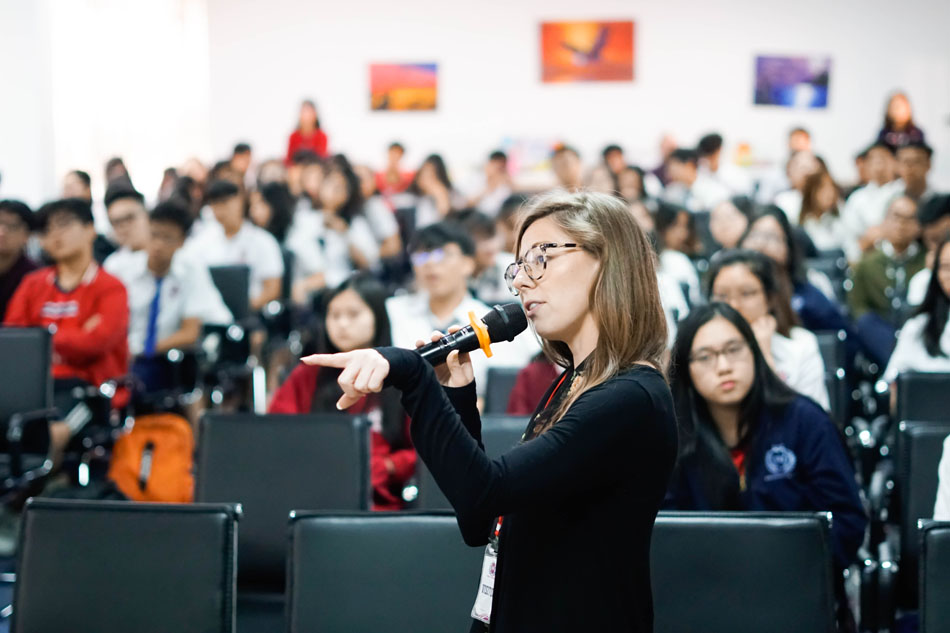
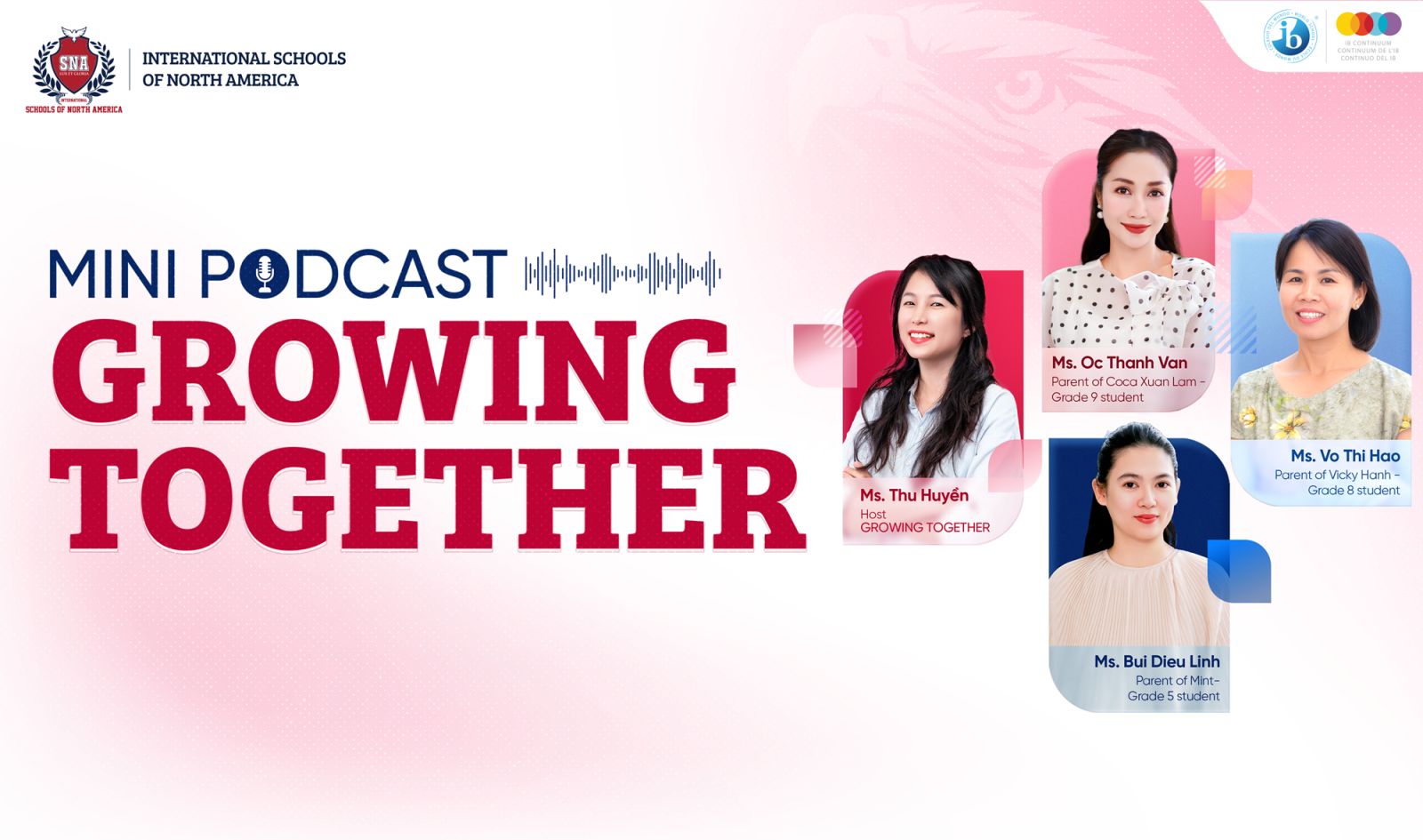
At SNA, we understand that raising a child is never a solitary journey. Through the Growing Together podcast series, we aim to create meaningful conversations and offer new perspectives along with deeper understanding for families.
In addition, our parent workshops provide practical psychological insights that help parents feel more confident as they support their children.
When parents choose to walk alongside their children, generational distance is no longer a barrier. It becomes a bridge that leads toward the future.
📍 Contact SNA for admissions and parent programs
Address: Street 20, Him Lam Residential Area, Binh Chanh District, Ho Chi Minh City
Hotline: 0964 466 014