0964 466 014




What Is the International Baccalaureate (IB)? Structure, Benefits, and the IB Diploma (2026)

The International Baccalaureate (IB) is an international education framework developed by the International Baccalaureate Organization (IBO) in 1968. Designed for students ages 3–19, it offers a continuous learning pathway through three programs: the Primary Years Programme (PYP), Middle Years Programme (MYP), and Diploma Programme (DP). As of May 2026, IB programs were offered at more than 6,200 schools in over 160 countries. The IB Diploma is assessed on a 45-point scale; in the May 2026 examination session, the global average was 30.88 points, with a pass rate of 82.61%.
Unlike AP or A Levels, the IB takes a holistic approach to assessment, considering not only examinations but also independent research and community engagement.
This article explains what the IB is, how its three programs are structured, how IB DP scores are calculated, what IB tuition costs in Vietnam, and how parents can identify a trustworthy IB school.


- 1. What Is the International Baccalaureate (IB)?
- The IB Learner Profile: 10 Attributes
- 2. The IBO and IB Authorization Standards
- An Important Distinction for Parents
- Four Steps to Verify Whether a School Is Authorized to Offer the IB
- 3. IB Program Structure: Three Educational Stages
- IB PYP — Primary Years Programme (Ages 3–12)
- IB MYP — Middle Years Programme (Ages 11–16)
- IB DP — Diploma Programme (Ages 16–19)
- 4. The IB Diploma Programme Framework at SNA
- The Six IB DP Subject Groups
- The Three Elements of the DP Core
- 5. Practical Benefits of an IB Education
- The IB Diploma Is Recognized by More Than 5,000 Universities
- Potential to Earn 6–24 University Credits
- A Stronger Foundation for Scholarship Applications
- IB Tuition Fees in Vietnam
- Academic Evidence: How Might the IB Affect University Admissions?
- 6. IB DP Scoring and May 2026 Examination Results
- How IB DP Scores Are Calculated
- Global IB Results: May 2026
- 7. IB Diploma vs. IB Course Results: What Is the Difference?
- 8. Frequently Asked Questions About the IB
- 1. Is the IB program stressful?
- 2. Can students pursue the IB if they are not equally strong in every subject?
- 3. How is the IB different from AP?
- 4. Where can students study the IB in Ho Chi Minh City?
- 5. Does the IB Diploma help students earn international scholarships?
- 6. What makes the IB program at SNA Saigon South distinctive?
- 7. What is a good IB score?
- 8. When should my child start studying the IB?
- 9. Can students transfer from the Vietnamese national curriculum to the IB?
1. What Is the International Baccalaureate (IB)?
The International Baccalaureate is an international education framework comprising three connected programs—PYP, MYP, and DP—developed by the Switzerland-based International Baccalaureate Organization. Its approach emphasizes critical thinking and broader student development rather than examination scores alone.
The table below compares the IB Diploma Programme with two other widely recognized academic pathways.
| Criteria | IB (Diploma Programme) | AP (United States) | A Levels (United Kingdom) |
| Structure | Comprehensive: six subject groups plus TOK, EE, and CAS | Individual advanced courses, selected independently | Typically three or four subjects studied in depth |
| Assessment | Broad portfolio of learning and final examinations | Subject-specific examinations scored 1–5 | Subject-specific examinations graded A*–E |
| Best suited to |
Students considering universities in multiple countries and building a well-rounded profile | Students targeting U.S. universities who want flexible subject choices | Students targeting the UK and Commonwealth destinations |
Developed in Geneva, Switzerland, in 1968, the IB serves students ages 3–19 through the PYP–MYP–DP continuum. According to official IBO figures for May 2026, more than 8,900 IB programs were offered across over 6,200 schools in more than 160 countries, reaching more than 1.95 million students.
Unlike A Levels and AP, which emphasize individual subject outcomes, the IB also develops and assesses critical thinking, independent learning, and a sense of responsibility toward the wider community.

The IB Learner Profile: 10 Attributes
The IB Learner Profile sets out ten attributes that students are encouraged to develop. Rather than a list to memorize, it provides a framework for teaching and learning across IB programs.
| Attribute | What It Means in Practice |
| Inquirers | Ask questions and actively seek understanding rather than passively receiving information |
| Knowledgeable | Develop meaningful understanding instead of relying on rote memorization |
| Thinkers | Analyze and evaluate information before reaching conclusions |
| Communicators | Express ideas clearly across languages and forms of communication |
| Principled | Act with honesty, integrity, and responsibility |
| Open-minded | Respect different perspectives and cultures |
| Caring | Show consideration for others and the environment |
| Risk-takers | Explore new ideas and embrace challenges, including the possibility of failure |
| Balanced | Maintain physical, emotional, and mental well-being |
| Reflective |
Review their learning experiences to identify ways to improve |
2. The IBO and IB Authorization Standards
The International Baccalaureate Organization (IBO) is a nonprofit organization registered in Switzerland. It develops IB curricula, supports teacher training, and authorizes schools that meet its standards to deliver IB programs. Only authorized IB World Schools can offer the IB programs for which they have received authorization.
As of May 2026, the IB network included more than 6,200 schools in over 160 countries. In 2025 alone, the IBO authorized 622 additional programs.
Did you know? According to an IBO global report, the network included approximately 4,162 schools in more than 140 countries in 2015. By May 2026, this had increased to more than 6,200 schools in over 160 countries—growth of nearly 50% in just over a decade.
To become authorized, schools undergo an evaluation process that may take approximately two to four years, covering curriculum, teaching staff, and facilities. This is one reason IB schools remain relatively limited in number in Vietnam compared with some other Southeast Asian countries.
An Important Distinction for Parents
| Status | Meaning | What Parents Should Know |
| IB-authorized school | A school officially authorized by the IBO | Students may pursue the IB qualification for the authorized program |
| IB candidate school | A school seeking authorization | Authorization is not guaranteed |
| IB World School |
An umbrella designation for an authorized school | The school may offer one, two, or all three programs |
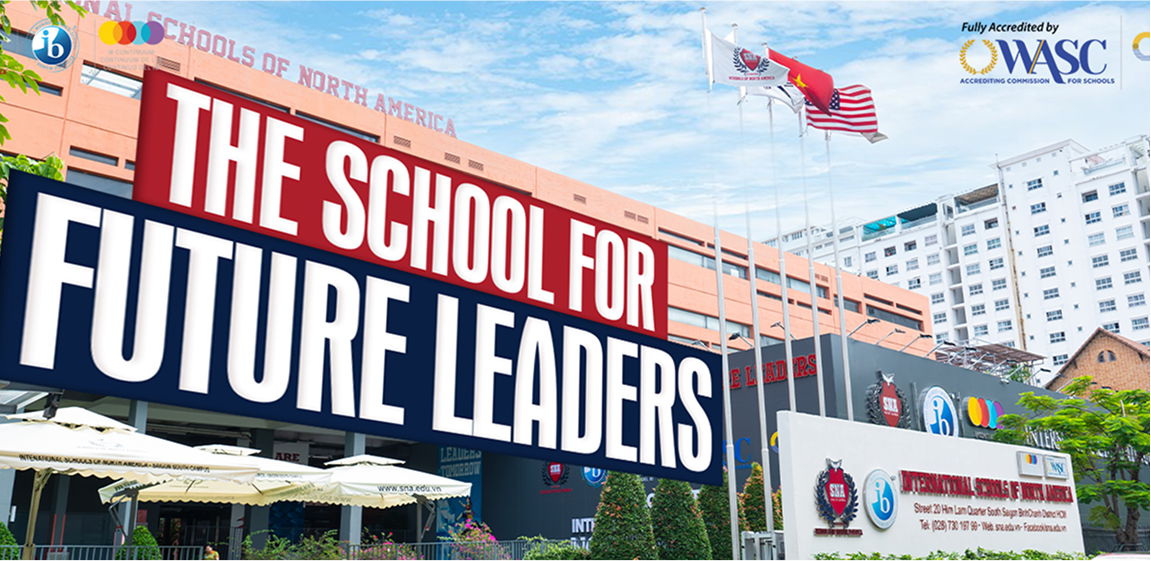
SNA Saigon South (International Schools of North America – Saigon South Campus) is authorized to deliver the full IB continuum. According to its IB school record (school code 061023), the authorization dates are:
| Program | IB Authorization Date |
| IB Diploma Programme (DP) | May 26, 2020 |
| IB Middle Years Programme (MYP) | July 29, 2021 |
| IB Primary Years Programme (PYP) | May 16, 2022 |
Verification source: SNA’s school profile on ibo.org. Related reading: SNA Accreditations and Authorizations.
Four Steps to Verify Whether a School Is Authorized to Offer the IB
Some schools describe themselves as “IB-inspired” or “following an IB approach” without holding official authorization. Parents can verify a school’s status in a few minutes:
- Visit the “Find an IB World School” tool at ibo.org and search for the school by name.
- Check the authorized programs (PYP, MYP, DP, or CP). Look for an authorization date for the program your child intends to enter.
- Match the authorization to your child’s grade level. For example, a student entering Grade 11 should attend a school authorized to offer the DP.
- Ask which DP subjects are actually available and consult the school’s IB profile for registered subject offerings.
Important: Candidate schools are not yet authorized to award the IB Diploma. If your child enrolls during candidacy, ask about the school’s contingency plan if authorization is delayed.
3. IB Program Structure: Three Educational Stages
The International Baccalaureate offers a continuous pathway for students ages 3–19 through the PYP (inquiry and exploration), MYP (interdisciplinary connections), and DP (university preparation). The IBO also offers a fourth program, the Career-related Programme (CP).
| Program | Age Range | Primary Focus |
| IB PYP | Ages 3–12 | Inquiry-based learning and curiosity |
| IB MYP | Ages 11–16 | Interdisciplinary connections and independent learning |
| IB DP | Ages 16–19 | Diploma qualification and university preparation |
IB PYP — Primary Years Programme (Ages 3–12)
The PYP does not focus on overwhelming children with content. Instead, it nurtures natural curiosity and a sense of community. Children learn through exploration rather than memorization, developing habits of thinking that will support their future learning.
Note: At SNA Saigon South, the IB PYP begins in Grade 1.
IB MYP — Middle Years Programme (Ages 11–16)
The MYP develops a strong academic foundation and encourages students to apply knowledge across disciplines to real-world issues. Students increasingly take ownership of their learning and complete interdisciplinary projects, preparing them for the demands of the DP. In the final MYP year, students complete the Personal Project, which introduces independent inquiry ahead of the DP Extended Essay.
IB DP — Diploma Programme (Ages 16–19)
The IB Diploma Programme spans the final two years of high school. International universities use DP results in admissions decisions. Over these two years, students study six subjects and complete the Extended Essay and Creativity, Activity, Service (CAS) requirements alongside their other coursework. Related reading: The IB Diploma Programme at SNA.
A lesser-known fourth option is the IB Career-related Programme (CP), for students ages 16–19 who wish to combine academic study with career-related learning. Not every IB school offers the CP, so parents should confirm program availability directly.
An IB Continuum School is authorized to offer all three programs: PYP, MYP, and DP. According to the original Vietnamese article, four schools in Ho Chi Minh City offer this continuum: SNA Saigon South, ISHCMC, EIS, Tesla and Renaissance Saigon.

4. The IB Diploma Programme Framework at SNA
At SNA Saigon South, the IB DP follows the IBO framework. In Grades 11 and 12, students study six subjects spanning the DP subject groups, including three or four Higher Level (HL) subjects, while completing the three elements of the DP core: Theory of Knowledge (TOK), the Extended Essay (EE), and Creativity, Activity, Service (CAS).
The Six IB DP Subject Groups
Students generally select at least one subject from each of the six groups, with the option of studying an additional subject from Groups 1–5 instead of an arts subject. Three or four subjects are taken at Higher Level, with the remainder at Standard Level (SL). The IBO recommends approximately 240 teaching hours per HL subject and 150 hours per SL subject.

| Group | Subject Area | Examples |
| 1 | Studies in Language and Literature | English Language and Literature; Vietnamese Language and Literature |
| 2 | Language Acquisition | English B; French, Spanish, or Mandarin ab initio |
| 3 | Individuals and Societies | Economics; Psychology; Business Management; Digital Society |
| 4 | Sciences | Physics; Chemistry; Biology; Environmental Systems and Societies (ESS) |
| 5 | Mathematics | Mathematics: Analysis and Approaches (AA); Mathematics: Applications and Interpretation (AI) |
| 6 | The Arts | Visual Arts; Film—or an additional subject from Groups 1–5 |
The Three Elements of the DP Core
In addition to their six subjects, students pursuing the full IB Diploma must complete all three core components. These requirements distinguish the DP from individual AP and A Level subjects.
| Component | Purpose | Requirements Described in the Original Article |
| TOK — Theory of Knowledge | Explores how knowledge is produced and evaluated; encourages students to question why they believe what they believe | Approximately 100 teaching hours; TOK exhibition (maximum 950 words, internally assessed, one-third of the TOK mark) and TOK essay (maximum 1,600 words, selected from six prescribed titles, externally assessed, two-thirds of the mark) |
| EE — Extended Essay | An independent academic research project on a topic of the student’s choice, supported by a supervisor | Up to 4,000 words; typically developed over approximately six to eight months |
| CAS — Creativity, Activity, Service |
Creative pursuits, physical activity, and service to the community | Not awarded points, but completion is required for the IB Diploma |
Important update: Since the 2022 examination session, the former TOK presentation has been replaced by the TOK exhibition. Students must complete the TOK assessments and meet the diploma conditions relating to TOK and EE results.
About SNA Saigon South: SNA is authorized to offer PYP, MYP, and DP and is described in the source article as holding WASC and CIS accreditation. Students entering in Grade 1 can follow the IB continuum through graduation. The source article states that the SNA NextGen Scholarship for the 2027–2028 academic year covers up to 30% of tuition.
5. Practical Benefits of an IB Education
Three major benefits of the IB are the international recognition of the DP qualification, potential eligibility for university credits, and a distinctive scholarship application profile supported by experiences such as the Extended Essay and CAS.
The IB Diploma Is Recognized by More Than 5,000 Universities
The IB Diploma is recognized by universities across more than 160 countries, including leading institutions in the United States (such as Harvard, MIT, and Stanford), the United Kingdom (including Oxford and Cambridge), Australia, Canada, Singapore, and much of Europe. The source article presents this broad recognition as an advantage over many national high school qualifications.
Potential to Earn 6–24 University Credits
Many universities in the United States, Canada, and the United Kingdom may grant credit or advanced standing to students with strong IB DP results, often for HL subject scores of 5 out of 7 or above. Depending on the university’s policy, the article cites an indicative range of 6–24 credits. With annual U.S. university tuition estimated in the article at USD 50,000–70,000, completing the equivalent of a semester in advance may represent considerable savings in time and tuition.
A Stronger Foundation for Scholarship Applications
The Extended Essay and CAS give IB students meaningful research and extracurricular experiences to discuss in scholarship essays and interviews. These experiences can help applicants demonstrate qualities that may not be captured by examination results alone.
IB Tuition Fees in Vietnam
IB tuition varies considerably in Vietnam depending on the school and grade level. The figures below are indicative estimates from the original article.
| Program | Indicative Annual Tuition | Notes |
| IB PYP — Primary | VND 300–400 million | Varies by school; additional fees excluded |
| IB MYP — Middle | VND 380–460 million | Varies by school; additional fees excluded |
| IB DP — Diploma | VND 460 million to over 800 million | Varies by school; IBO examination fees excluded |
| SNA Saigon South (scholarship) |
Up to 30% tuition reduction through NextGen | Academic year 2027–2028 |
For official information, see: SNA Saigon South Tuition Fees 2026–2027.
Academic Evidence: How Might the IB Affect University Admissions?
A 2015 article in the Ho Chi Minh City University of Education Journal of Science (Issue 8[74]) examining IB implementation in U.S. high schools reported admission rates above 90% for IB students applying to Florida State University and the University of Central Florida, and approximately 70% for Boston University and the University of Michigan. For Princeton University, it reported a 16% admission rate—approximately twice the rate for students in other programs.
The study also described instances of IB students transferring up to 61 credits to Texas Tech University and 51 credits to the University of Texas at Austin, potentially shortening the time needed to earn a degree by almost two semesters. These are study-specific examples, not guaranteed outcomes for every IB graduate.
6. IB DP Scoring and May 2026 Examination Results
The IB Diploma is assessed on a maximum of 45 points: up to 42 from six subjects and up to three additional points from TOK and the Extended Essay. Students generally need at least 24 points and must meet all other diploma requirements to be awarded the qualification. The May 2026 global average was 30.88 points, and the pass rate was 82.61%.
How IB DP Scores Are Calculated
| Component | Maximum Points | How It Is Assessed |
| Six HL/SL subjects | 42 | Each subject is graded on a scale of 1–7 |
| TOK + Extended Essay | 3 | Combined using the A–E grade matrix |
| CAS | 0 | No numerical points; completion is compulsory |
| Total | 45 | At least 24 points, plus all other diploma conditions |
Global IB Results: May 2026
| Measure | May 2026 Result |
| Students receiving DP and CP results | Approximately 209,600 |
| Schools with DP examination candidates | 3,442 |
| Global average DP score | 30.88/45 (2025: 30.58) |
| Average subject grade | 4.93/7 |
| Global diploma pass rate | 82.61% |
| Candidates scoring above 40 points |
10,526 (approximately 5%) |
Source cited in the Vietnamese article: IBO announcements and TES reporting (July 2026).
An educator’s perspective: IB outcomes depend not only on academic ability but also on thoughtful HL and SL subject selection. Students who choose subjects aligned with their strengths may perform better than those who select more challenging subjects solely to impress university admissions teams. Parents are encouraged to consult DP teachers as early as the end of Grade 10.
7. IB Diploma vs. IB Course Results: What Is the Difference?
The full IB Diploma requires six subjects along with TOK, EE, and CAS, and is widely used as a secondary school leaving qualification. Individual IB course results, sometimes informally referred to as “IB Certificates,” verify achievement in selected subjects but are not equivalent to earning the full Diploma.
| Criteria | Full IB Diploma (IBDP) | Individual IB Course Results (“IB Certificate”) |
| Structure | Six subjects plus TOK, EE, and CAS | Selected individual IB subjects |
| Duration | Two consecutive years | Flexible, depending on subjects taken |
| Workload | Broad and academically demanding | More focused, depending on student strengths |
| International recognition | Accepted by many international universities | Varies by subject and institution |
| Equivalent to a high school qualification | Can serve as an international high school leaving qualification, subject to local recognition rules | Usually requires a separate high school diploma |
| Suitable for | Students targeting university study abroad and a broad academic program | Students seeking results in selected IB subjects without completing the full Diploma |
Terminology note: Current IBO materials generally refer to these students as “DP course students” and the outcomes as “DP course results.”
8. Frequently Asked Questions About the IB
Here are nine common questions parents ask when considering an IB education.
1. Is the IB program stressful?
The IB DP is demanding because students complete six subjects, the Extended Essay, and CAS over two years. Strong time-management skills are important. At the same time, CAS encourages students to engage in sports, the arts, and community service, supporting a more balanced experience beyond academics.
2. Can students pursue the IB if they are not equally strong in every subject?
Yes. The DP allows students to build a subject combination around their strengths. Only three or four subjects are studied at Higher Level, while the others are taken at Standard Level. Students do not need to excel equally in every area, but they should have clear goals and strong independent learning habits.
3. How is the IB different from AP?
The IB offers a connected educational pathway from PYP through MYP to DP, with compulsory components such as the Extended Essay and CAS in the full Diploma. AP, by contrast, consists of individual advanced courses originating in the United States, offering greater flexibility for students who want to focus on selected academic subjects.
4. Where can students study the IB in Ho Chi Minh City?
The original article lists four authorized IB Continuum Schools in Ho Chi Minh City: SNA Saigon South, ISHCMC, EIS, and Renaissance Saigon. It also notes that BIS offers the DP; AIS combines the PYP, Cambridge IGCSE, and DP; and TAS offers the PYP and is seeking DP authorization.
5. Does the IB Diploma help students earn international scholarships?
Yes, it may strengthen an application, but scholarships are not automatic. Strong IB results can enhance an academic profile, while EE and CAS experiences provide material for essays and interviews. Awards ultimately depend on each university’s criteria and the applicant’s overall achievements.
6. What makes the IB program at SNA Saigon South distinctive?
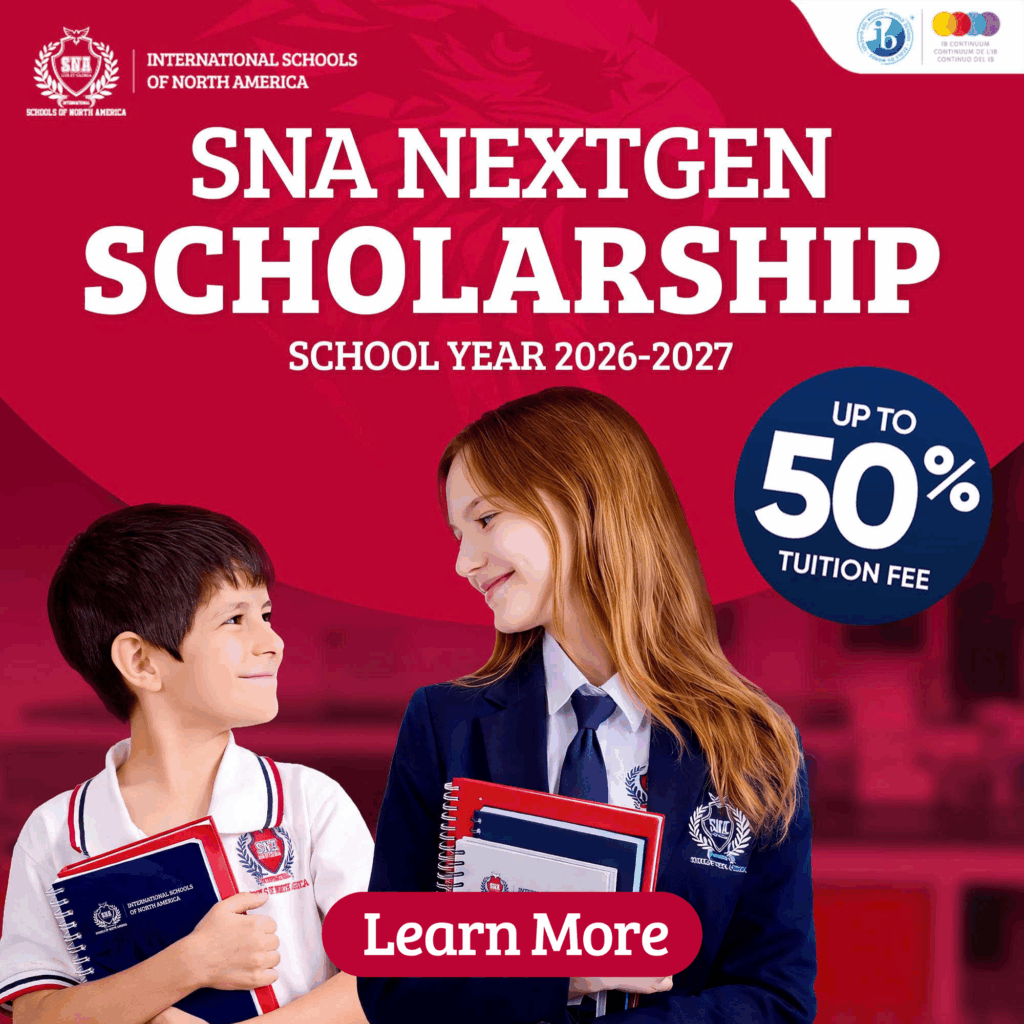
SNA is identified in the original article as one of four IB Continuum Schools in Ho Chi Minh City, authorized to offer the PYP, MYP, and DP. The source also describes WASC and CIS accreditation. Students can begin in Grade 1 and continue through graduation at the same school. The article mentions up to 50% tuition support through the 2026–2027 SNA NextGen Scholarship.
7. What is a good IB score?
The global average for the May 2026 session was 30.88 out of 45. Against that benchmark, 35 points or above is generally considered a strong result, while scores of 40 or higher place students among approximately the top 5% of candidates, according to the figures cited in the original article. Actual entry requirements differ by university and program.
8. When should my child start studying the IB?
Starting earlier can make the transition smoother. Students who progress through the PYP or MYP become familiar with inquiry-based learning, independent research, and academic writing before entering the DP. The original article recommends beginning by Grade 10 where possible, allowing a year of preparation before the two-year DP.
9. Can students transfer from the Vietnamese national curriculum to the IB?
Yes. Two important areas of preparation are academic English—including reading comprehension and essay writing, not only conversational English—and independent study habits supported by critical thinking. Many IB schools offer language support for students moving between systems. Parents should ask about these services during admissions.